What to Pack for the Sahara Expedition 🎒🐪
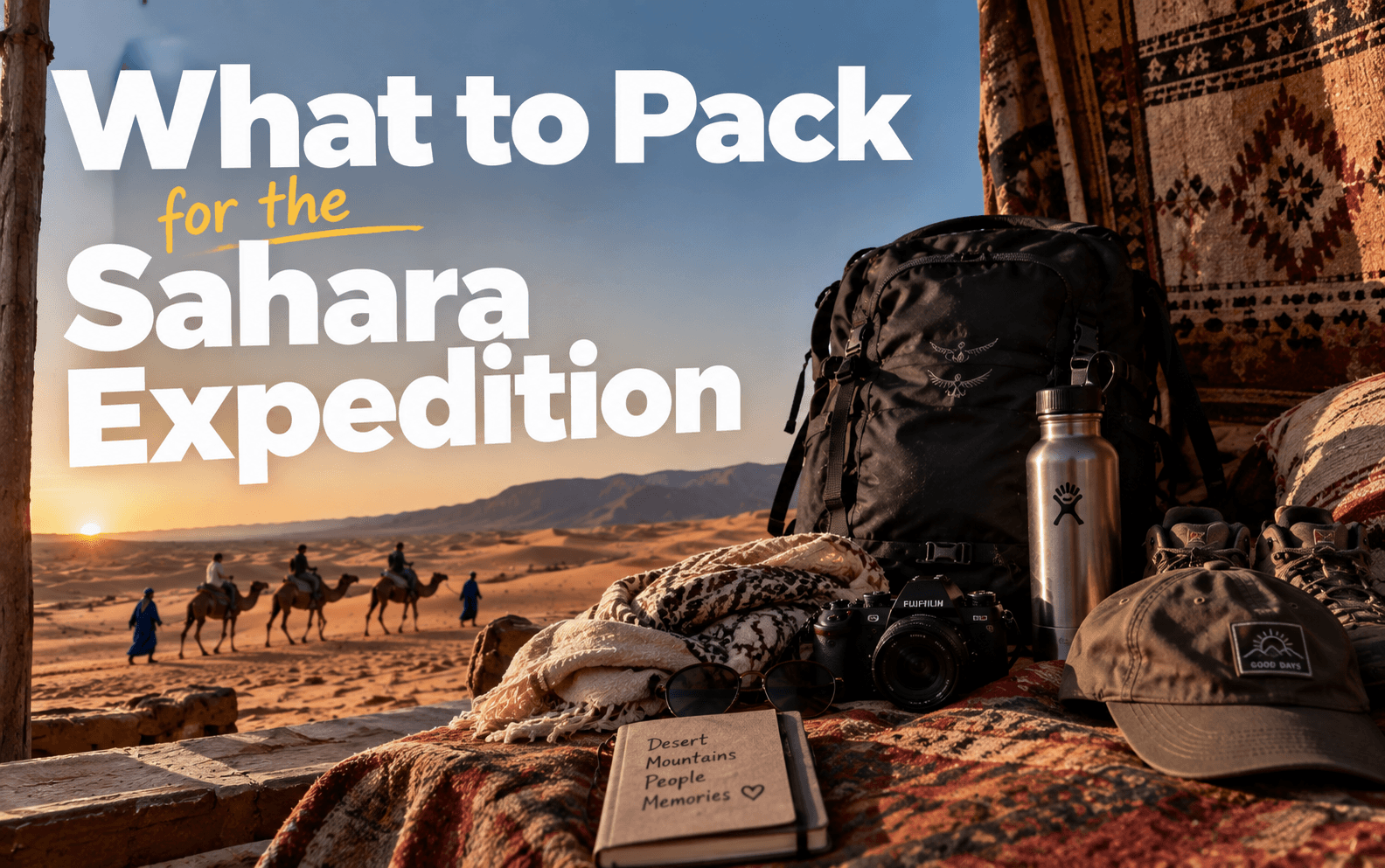
Getting ready for the Sahara Expedition? 🏜️🐪
Packing for Morocco , especially for a journey from Marrakech to the Sahara, is a little different from packing for a normal city break.
During these 5 days, you’ll experience several completely different environments: Marrakech, the High Atlas Mountains, Aït Ben Haddou, Dades Valley, Todra Gorge and the Sahara Desert at Merzouga.
And here’s something many first-time visitors don’t expect:
The Sahara isn’t always hot.
Temperatures can change considerably between daytime and nighttime, and the Atlas Mountains can be much cooler than Marrakech or the desert.
The golden rule is simple:
Pack light. Dress in layers. Prioritise comfort.
This guide covers what to bring, what to wear each day, seasonal differences, camel ride essentials, desert camp tips and a complete checklist.
🗺️ The 5-Day Route
Day 1 — Arrival in Marrakech
Airport arrival, hotel check-in and free time.
Day 2 — Marrakech → High Atlas → Aït Ben Haddou → Dades
Road trip through the Atlas Mountains, Aït Ben Haddou and Dades Valley.
Day 3 — Dades → Todra Gorge → Merzouga → Sahara
Todra Gorge, arrival in Merzouga, camel ride at sunset and night at the desert camp.
Day 4 — Sahara → Ouarzazate → Marrakech
Sunrise in the Sahara and return journey to Marrakech.
Day 5 — Departure from Marrakech
Breakfast and airport transfer according to your flight schedule.
🧳 Don’t Overpack
For five days, a medium suitcase or travel backpack is more than enough.
We also strongly recommend bringing a small day backpack.
Keep your daily essentials inside:
Passport
Phone
Wallet
Water
Sunglasses
Sunscreen
Camera
Power bank
Medication
Scarf/buff
Hoodie or jacket
You’ll move between hotels, vehicles and the desert camp, so travelling light makes everything easier.
🌡️ What Weather Should You Expect?
The climate changes throughout the route.
Marrakech: usually warm during the day, cooler in the evening.
High Atlas Mountains: noticeably cooler, especially in winter and early morning.
Dades & Todra: warm and dry during the day, cooler after sunset.
Merzouga & Sahara: hot during the day for much of the year, but temperatures can fall quickly after sunset.
The best strategy is always:
Light clothing + layers you can easily add or remove.
📅 What to Pack According to the Season
🌸 Spring — March to May
Spring is one of the most comfortable periods for the Sahara.
Conditions | Recommendation |
|---|---|
Daytime | Warm to hot |
Nighttime | Cool to mild |
Day clothes | T-shirts and lightweight trousers |
Evening | Hoodie or light jacket |
Shoes | Closed comfortable trainers |
Essentials | Sunglasses, hat, scarf, SPF 30–50 |
March can still have cool desert nights, while May can already become quite hot during the day.
Best strategy: lightweight clothes + hoodie/light jacket.
☀️ Summer — June to August
Summer in Merzouga can be extremely hot, with daytime temperatures above 40°C.
Conditions | Recommendation |
|---|---|
Daytime | Very hot |
Nighttime | Warm |
Clothes | Loose, lightweight and breathable |
Trousers | Linen/cotton or lightweight trousers |
Sun protection | Hat, sunglasses and SPF 50 |
Hydration | Extremely important |
Evening | Very light layer |
Loose clothing that covers your skin can actually feel more comfortable than exposing more skin to direct sunlight.
Avoid thick jeans and heavy fabrics.
🍂 Autumn — September to November
Autumn is another excellent period for the Sahara.
Conditions | Recommendation |
|---|---|
Daytime | Warm to hot |
Nighttime | Mild to cool |
Clothes | T-shirts and lightweight trousers |
Evening | Hoodie/fleece and light jacket |
Shoes | Closed trainers |
Essentials | Scarf, sunglasses and sunscreen |
September: still very warm.
October: warm days and cooler evenings.
November: colder nights, bring a hoodie, jacket, long trousers and warmer socks.
❄️ Winter — December to February
Winter is where many travellers underestimate the Sahara.
Days can be pleasant and sunny, but nights can become very cold.
Conditions | Recommendation |
|---|---|
Daytime | Mild |
Nighttime | Cold |
Atlas Mountains | Cold |
Base layer | Long-sleeve top |
Mid layer | Hoodie/fleece |
Outer layer | Warm jacket |
Bottom | Long trousers |
Extras | Warm socks, beanie, optional gloves |
For winter, think:
T-shirt → long sleeve → hoodie/fleece → jacket
🌡️ Merzouga Temperature Guide
Approximate typical temperatures:
Month | Day | Night |
|---|---|---|
January | ~19°C | ~3°C |
February | ~21°C | ~5°C |
March | ~25°C | ~8°C |
April | ~29°C | ~12°C |
May | ~34°C | ~17°C |
June | ~39°C | ~21°C |
July | ~42°C | ~25°C |
August | ~41°C | ~25°C |
September | ~36°C | ~21°C |
October | ~30°C | ~15°C |
November | ~24°C | ~9°C |
December | ~20°C | ~4°C |
These are approximate climate averages, not a weather forecast. Always check the forecast shortly before travelling.
👕 What to Wear Each Day
🛬 Day 1 — Marrakech
Comfort is the priority.
Wear:
T-shirt or comfortable top
Comfortable trousers
Trainers
Light jacket or hoodie if needed
Sunglasses
Keep your passport, medication, charger and one change of clothes in your hand luggage.
🏔️ Day 2 — Atlas Mountains & Dades
Temperatures may change throughout the day.
Wear:
T-shirt
Comfortable trousers
Trainers
Hoodie/fleece
Hat
Sunglasses
Keep your jacket somewhere accessible because the Atlas Mountains can be much cooler than Marrakech.
🐪 Day 3 — Sahara Desert
This is the most important day for choosing the right clothes.
Wear:
Lightweight T-shirt or shirt
Loose trousers
Closed trainers
Hat/cap
Sunglasses
Scarf/buff
Sunscreen
🐪 What to Wear for the Camel Ride
Loose trousers
Much more comfortable than tight jeans when sitting on the camel.
Closed shoes
Trainers are the easiest option for sand and walking around the camp.
Scarf or buff
Useful against sun, wind and blowing sand.
Sunglasses
The sunlight reflected by the sand can be intense.
Sunscreen
Apply SPF 30–50 before entering the desert.
🏍️ Optional Quad Activity
If you’re doing the quad experience, wear:
Comfortable trousers
Closed shoes
Sunglasses
Scarf/buff
Expect dust and sand.
Avoid wearing anything you don’t want to get dirty.
🌙 Desert Camp
After sunset, temperatures can drop quickly.
Bring:
Hoodie/fleece
Jacket according to season
Long trousers
Socks
Comfortable sleepwear
Power bank
Small torch or phone flashlight
During winter, add warm socks and a beanie.
🌄 Sahara Sunrise
Prepare your clothes the night before.
You’ll probably leave the tent while it’s still cool.
Have ready:
Hoodie/jacket
Long trousers
Trainers
Camera or phone
Sunrise is one of the best moments for photos.
🚌 Day 4 — Return to Marrakech
Another long road-trip day.
Wear comfortable clothing:
T-shirt
Comfortable trousers
Trainers
Hoodie/jacket
Keep headphones, water, snacks and your power bank in your day bag.
You may also want one casual outfit for your final evening in Marrakech.
✈️ Day 5 — Departure
Wear comfortable travel clothes.
Before leaving the hotel, check:
Passport
Wallet
Phone
Charger
Power bank
Flight information
Luggage
And check under the bed. 😉
👕 Clothing Checklist
For five days, we recommend approximately:
Clothing
☐ 4–5 T-shirts/tops
☐ 1 long-sleeve top
☐ 2–3 comfortable trousers
☐ 1 pair of loose trousers for the camel ride
☐ Hoodie or fleece
☐ Jacket appropriate for the season
☐ Underwear
☐ Socks
☐ Sleepwear
☐ Shorts if appropriate
Footwear
☐ Comfortable trainers
☐ Flip-flops/sliders
You normally don’t need hiking boots for this itinerary.
☀️ Essential Sahara Items
Whatever the season, bring:
☐ Sunglasses
☐ Hat/cap
☐ Scarf/buff
☐ SPF 30–50 sunscreen
☐ Lip balm
☐ Moisturiser
☐ Small backpack
☐ Water bottle
☐ Power bank
💧 Water & Hydration
The dry climate can dehydrate you quickly.
Drink regularly during the day.
We recommend drinking bottled water rather than tap water during the expedition.
Electrolyte sachets can also be useful in hotter months.
🧼 Toiletries
Bring travel-size versions of your normal essentials:
☐ Toothbrush and toothpaste
☐ Deodorant
☐ Shampoo/shower gel
☐ Sunscreen
☐ Moisturiser
☐ Lip balm
☐ Wet wipes
☐ Tissues
☐ Hand sanitiser
☐ Personal hygiene products
💊 Medication
Always bring any personal or prescription medication you need.
A small travel kit can also include:
☐ Plasters
☐ Painkillers you normally use
☐ Stomach medication
☐ Motion sickness medication if needed
☐ Electrolytes
Keep essential medication in your hand luggage.
📱 Electronics
Useful items include:
☐ Phone
☐ Charger
☐ Power bank
☐ Camera
☐ Camera charger
☐ Spare battery
☐ Memory cards
☐ Headphones
☐ Travel adapter if required
A 10,000 mAh or larger power bank is particularly useful.
🔌 Travel Adapter
Morocco mainly uses Type C and Type E plugs.
Most continental European travellers won’t need an adapter.
Travellers from the UK, Ireland, USA, Canada and other countries with different plug types should bring one.
📷 Camera Tips
The Sahara is incredible for photography, but fine sand can damage equipment.
Keep your camera protected when you’re not using it.
Avoid changing lenses outdoors when it’s windy.
Useful items:
☐ Camera pouch
☐ Spare battery
☐ Memory card
☐ Lens cloth/blower
🚁 Drones
Morocco has strict regulations regarding drones.
Do not bring a drone unless you have checked the current rules and obtained the required authorisation in advance.
Otherwise, you may have problems at customs.
💶 Cash & Money
Don’t rely entirely on bank cards.
Some smaller restaurants, shops and rural locations may prefer cash.
Useful for:
Lunches
Drinks
Snacks
Souvenirs
Optional activities
Personal expenses
Typical lunches during the road trip are around €12, although prices vary.
📄 Documents
Before travelling, check that you have:
☐ Passport
☐ Flight details
☐ Travel insurance
☐ Bank card
☐ Cash
☐ Emergency contacts
☐ Erasmus Fun booking information
Keep a digital copy of your passport and important documents.
Also check the latest entry and visa requirements for Morocco according to your nationality.
👗 Dressing in Morocco
Morocco is a Muslim-majority country.
Tourist destinations are accustomed to international visitors, but respectful clothing is recommended, especially in smaller towns.
Lightweight clothing covering shoulders and knees is practical, respectful and provides extra sun protection.
👩 Extra Tips for Women
Useful items may include:
☐ Hair ties
☐ Personal hygiene products
☐ Dry shampoo
☐ Sports bra for camel riding
☐ Lightweight scarf
☐ Loose trousers
Loose trousers are much more practical than skirts or dresses for the camel ride.
🌪️ Sand & Wind
If conditions become windy:
Cover your nose and mouth with your scarf
Wear sunglasses
Protect your camera
Keep electronics inside your bag when not in use
If you wear contact lenses, bring your glasses as a backup.
🚫 What You Don’t Need
Avoid overpacking:
❌ High heels
❌ Several pairs of shoes
❌ Excessive heavy clothing
❌ Expensive jewellery
❌ Huge camera equipment
❌ Full-size toiletries
❌ An oversized suitcase
For most people, trainers + flip-flops are enough.
🎒 Complete Sahara Packing Checklist
Documents & Money
☐ Passport
☐ Flights
☐ Travel insurance
☐ Bank card
☐ Cash
☐ Booking information
☐ Digital document copies
Clothing
☐ T-shirts
☐ Long-sleeve top
☐ Comfortable trousers
☐ Loose camel-ride trousers
☐ Hoodie/fleece
☐ Seasonal jacket
☐ Underwear
☐ Socks
☐ Sleepwear
Footwear
☐ Trainers
☐ Flip-flops
Desert Essentials
☐ Sunglasses
☐ Hat
☐ Scarf/buff
☐ Sunscreen
☐ Lip balm
☐ Moisturiser
☐ Water bottle
Electronics
☐ Phone
☐ Charger
☐ Power bank
☐ Camera
☐ Spare battery
☐ Memory cards
☐ Adapter if needed
Health & Toiletries
☐ Personal medication
☐ Basic travel kit
☐ Toothbrush
☐ Toiletries
☐ Wet wipes
☐ Hand sanitiser
⭐ 10 Things You Really Shouldn’t Forget
1. Passport 🛂
2. Comfortable trainers 👟
3. Loose trousers 👖
4. Sunglasses 🕶️
5. Hat/cap 🧢
6. Scarf/buff 🧣
7. Sunscreen 🧴
8. Hoodie or jacket 🧥
9. Power bank 🔋
10. Small backpack 🎒
And one more:
Enough phone storage for all those Sahara photos. 📸😂
❓ Quick FAQ
Is the Sahara cold at night?
It can be, especially between November and March.
Do I need hiking boots?
No. Comfortable trainers are normally enough.
Can I wear shorts?
Yes, depending on the weather, but lightweight trousers are often more practical.
Should I bring a scarf?
Yes. It’s one of the most useful items for sun, wind and sand.
Do I need cash?
Yes. Don’t rely entirely on cards.
Can I charge my phone at the camp?
Charging may be limited, so bring a power bank.
Can I bring a camera?
Yes. Just protect it carefully from sand.
Can I bring a drone?
Only if you’ve checked and obtained the required authorisation.
Is tap water recommended?
We recommend bottled water during the expedition.
🏜️ Ready for the Sahara?
You’re not packing only for a desert.
You’re packing for Marrakech, the Atlas Mountains, valleys, gorges and the Sahara — all in five days.
Remember the basic formula:
Light clothes + comfortable shoes + sun protection + warm layers + a small backpack.
Check the season before travelling, don’t overpack and keep your essentials easily accessible.
Then get ready to cross the Atlas Mountains, ride a camel into the dunes, watch the sunset over Erg Chebbi and spend an unforgettable night under the Sahara stars.
Pack light. Bring your sense of adventure.
The Sahara is waiting. 🐪🌅🏜️

Read time
10 min read
Published date
Category
🏜️ Sahara Expedition
Stay Connected!
Get travel updates, route guides, and insider tips from our desert team — straight to your inbox.